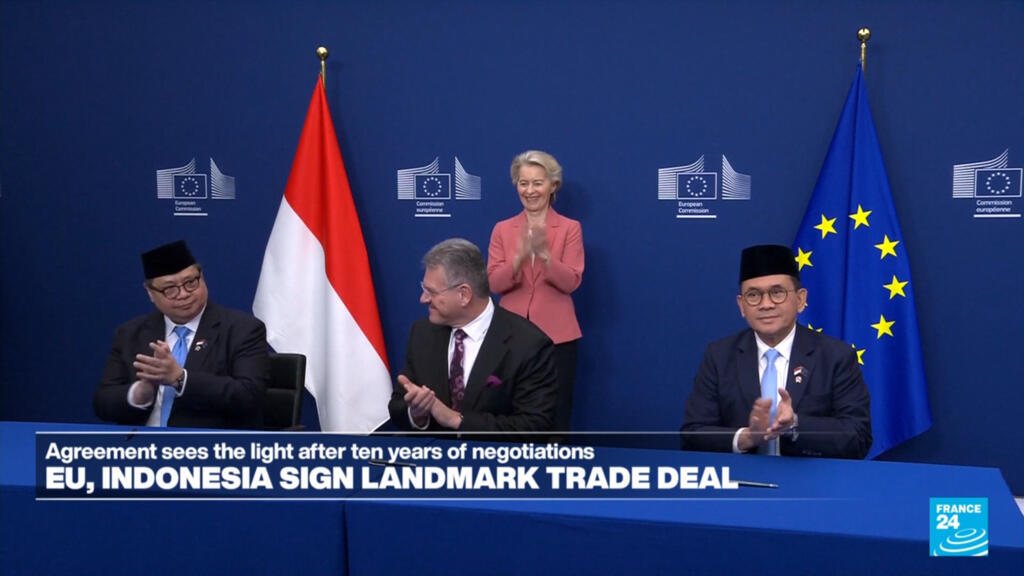
The European Union and Indonesia have signed a major trade agreement that removes almost all tariffs between the two trading partners, ten years after negotiations began. The deal eliminates 98.5 per cent of tariffs, a reduction that covers nearly every product line traded between the bloc and Southeast Asia's largest economy.
For Europe, the agreement opens access to a market of 280 million people and promises a steadier supply of nickel, a metal used in the batteries that power electric vehicles and energy storage systems. For Indonesia, it means easier exports of palm oil, textiles and footwear into the European market. The timing matters for Jakarta, because its existing EU trade preferences are set to expire on January 1.
Airlangga Hartarto, Indonesia's Coordinating Minister for Economic Affairs, spoke about the agreement in an interview on the France 24 programme, outlining how the deal is expected to shape bilateral commerce. His appearance followed the formal signing, which closes a negotiating process that stretched across a full decade and several changes of leadership on both sides.
The agreement is significant for Canadian readers as well, since it reflects a broader pattern of governments seeking diversified trade relationships and secure supply chains for critical minerals. Canada has its own interests in battery materials and in the resource economy, and developments in how Europe sources nickel and how Asian exporters reach European buyers can influence global prices and investment decisions that reach Canadian markets.
6