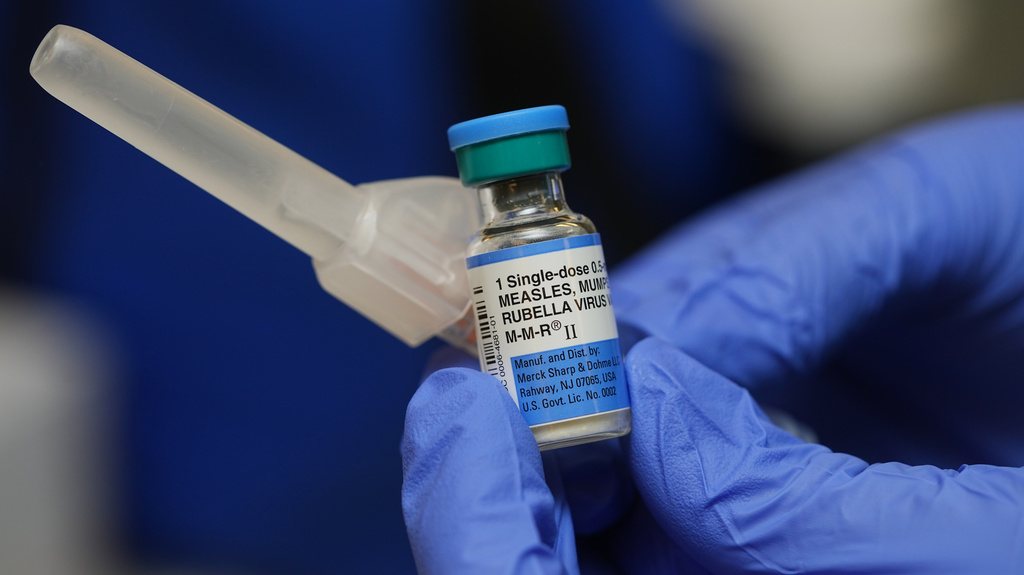
The United States and Mexico have lost their measles-elimination status, international health officials said Tuesday, after the highly contagious virus spread largely among unvaccinated people at its highest rate in more than 30 years. Bolivia also lost its status. The declaration, issued by the Pan American Health Organization, carries few practical implications and is largely symbolic, but it marks a sharp reversal for a disease that had been largely controlled through decades of scientific advances.
International health officials consider measles eliminated when the virus is no longer spreading locally among residents. The designation hinges on whether a single chain of transmission has continued uninterrupted for at least 12 months. Measles has been spreading throughout the Americas since 2024, and the outbreaks in North America began in close-knit Mennonite communities before moving into areas with low vaccination rates. Canada lost its own measles-free designation last year, the first time since 1998 that it had done so.
Experts say the announcement signals an erosion of public health preparedness. Vaccination rates have been falling against a number of diseases in the United States and globally. Because measles is one of the most infectious diseases known to medicine, it was widely seen as likely to be among the first vaccine-preventable illnesses to re-emerge if immunization faltered. Some experts warn that others may follow. «It can be the canary in the coal mine to other things,» said Dr. Susan Kansagra, chief medical officer of the Association of State and Territorial Health Officials.
Measles vaccines have safely stopped the virus from spreading in the United States for 30 years. Experts say a community vaccination rate of 95 per cent is needed to prevent outbreaks. As fewer parents vaccinate their children, and as federal leaders have sown doubt about the importance of immunization, the virus has found footholds across the country. All but three US states have reported a confirmed case this year. Senator Ron Wyden, a Democrat from Oregon, said the outcome was «the tragic yet predictable result of an ongoing campaign by grifters, quacks and charlatans» who put their own interests ahead of the health and safety of children.
The United States has recorded its worst two-year period for measles in a generation, with more than 7,000 cases and 11 deaths. Nearly all of those infected were either unvaccinated or did not report their vaccination status, and more than 10 per cent had to be hospitalized. The illness typically begins with a high fever followed by a rash that starts on the face and neck. Most people recover, but measles remains one of the leading causes of death among young children, according to the World Health Organization. Serious complications, including blindness and swelling of the brain, are more common in young children and in adults over 30.
This year alone, ten measles-associated deaths have been reported in the United States, and at least five of those who died were children. Health officials have not released detailed information on each death. The more than 5,400 confirmed cases so far this year already double the 2025 total, driven largely by an outbreak in Pennsylvania. Public health experts say the case counts are almost certainly an undercount. Since the United States eliminated measles in 2000, officials had usually logged fewer than 200 cases a year, most tied to international travel. Major outbreaks since 2025 have hit Texas, New Mexico, Arizona, Utah and South Carolina.
Federal officials have pushed back against criticism of their handling of the outbreak. Health Secretary Robert F. Kennedy Jr., who has no formal medical training and was a prominent figure in the anti-vaccine movement before being appointed to oversee federal health agencies, has argued that vaccination rates were waning for years before the current administration took office and that measles is not an American phenomenon. In January, a CDC leader told reporters that losing elimination status would be the cost of doing business globally. Some experts dispute that the outcome was inevitable. In August and September, the Centers for Disease Control and Prevention awarded $100 million in two tranches to support state and local measles-response work, and federal officials have said vaccination is the best way to prevent spread.
16