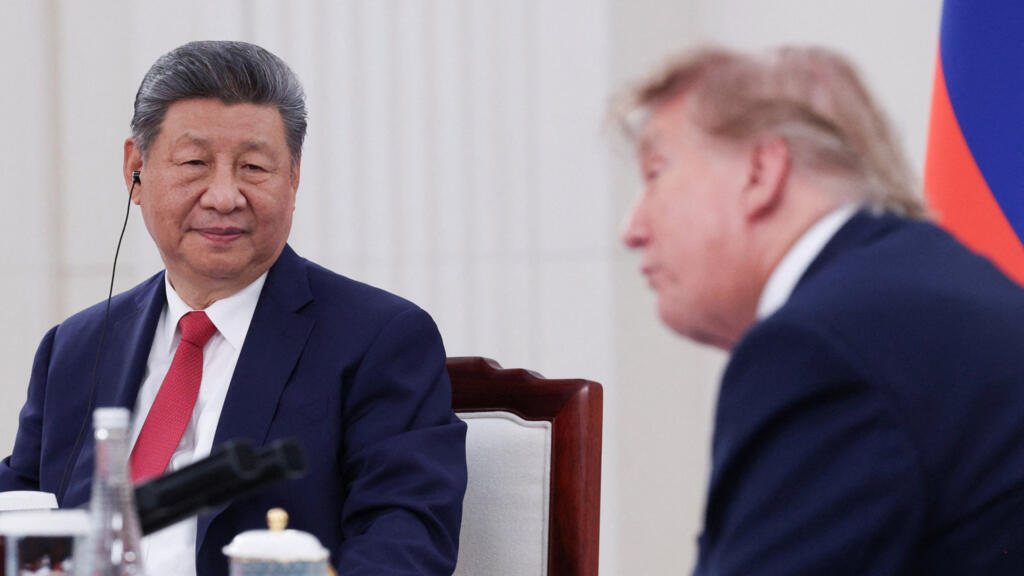
Despite warm words between US President Donald Trump and Chinese President Xi Jinping at three-way talks with Russian President Vladimir Putin in Shenzhen on Thursday, the simmering trade war between Washington and Beijing shows little sign of resolution. The tone of the meeting was cordial, but the underlying economic disputes that have strained relations between the two largest economies in the world remain unchanged.
The talks took place on the sidelines of the APEC summit, which brings together leaders from across the Asia-Pacific region. Russian state news agency TASS reported that Putin's plane landed at Shenzhen's Bao'an International Airport on Wednesday, a day before the meeting. Putin was expected to meet his American and Chinese counterparts and to take part in the wider summit later in the week, according to the reporting. The gathering drew attention because it placed the leaders of three major powers in the same room at a time of heightened tension in global affairs.
For Canada, the outcome matters because the US-China trade relationship shapes global supply chains, commodity demand and tariff policy that feed directly into Canadian exporters and importers. Any sustained escalation between Washington and Beijing can ripple through energy, agriculture and manufacturing markets, while a durable easing could relieve pressure on trading partners caught between the two. Canadian businesses and policymakers have been watching the dispute closely for signs of how the broader trading environment may evolve.
The Shenzhen meeting did not produce a published breakthrough on tariffs or on the other points of friction that have defined the dispute. Diplomatic exchanges of this kind often serve to keep channels open rather than to settle hard economic questions, and the reporting from the meeting indicates that the central disagreements remain in place. Observers will be looking for concrete steps in the weeks ahead rather than statements of goodwill, since goodwill alone has not so far changed the terms of the dispute.
The summit also underlines how the trade dispute now sits alongside wider geopolitical questions, including Russia's role in global affairs. Putin's presence in China this week drew attention in its own right, adding a further layer to a gathering already watched for its implications beyond trade. Coverage of the event also featured live reporting on the broader developments of the day, reflecting how closely the meeting was followed by international audiences.
For now, the picture that emerges from Shenzhen is one of engagement without resolution. The three leaders have kept lines of communication open, but the most significant economic questions between Washington and Beijing remain unanswered, and their effect on trading partners such as Canada will depend on whether talks produce concrete measures in the coming months.
14