
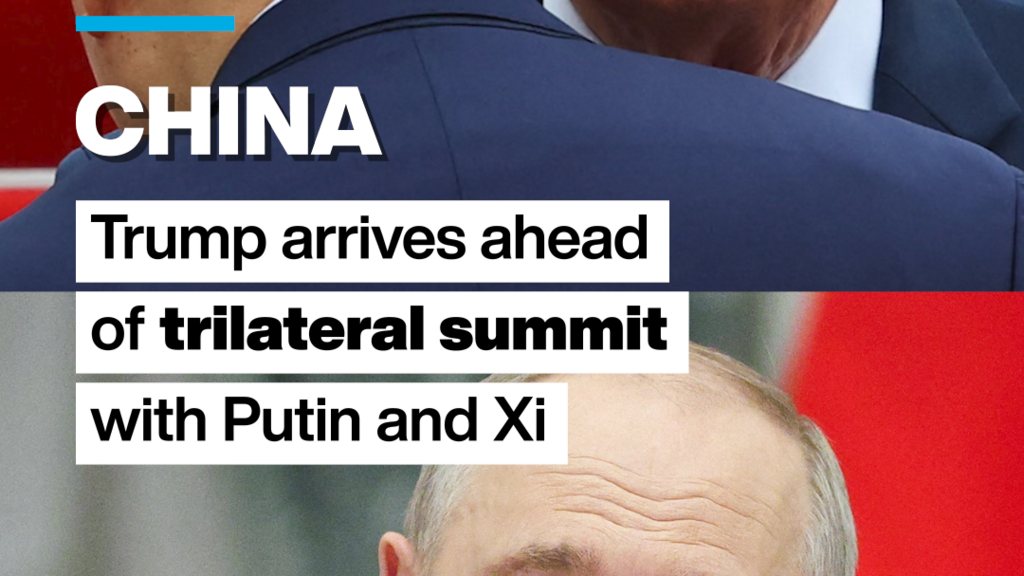
US President Donald Trump arrived in Shenzhen, China, on Wednesday ahead of a planned trilateral summit with Chinese President Xi Jinping and Russian President Vladimir Putin, held on the sidelines of the Asia-Pacific Economic Cooperation (APEC) summit. The three leaders are expected to address the wars in Ukraine and Iran as well as nuclear disarmament, a meeting that would bring the leaders of the United States, China and Russia together in one room.
A Chinese foreign ministry spokesperson announced on Monday that Xi would host the China-Russia-US summit with Putin and Trump in Shenzhen on November 19. The announcement set a date for a meeting that has drawn attention well beyond the APEC agenda, and Shenzhen has been preparing to welcome leaders from across the Asia-Pacific region. Chinese state media have described the city as ready to host the gathering, which is taking place in Guangdong province in southern China.
The trip comes after a difficult stretch for Trump at home. Reporting on his travel says he is heading to Asia after losses in the midterm elections, seeking diplomatic gains through meetings with Southeast Asian leaders as well as talks with Xi and Putin. One proposed item on the agenda is a discussion of the three countries' nuclear arsenals, a subject that has drawn attention from regional partners. The reporting places the trip against broader tensions over China, Iran and Ukraine, and against uncertainty about the direction of US policy.
The economic backdrop for the APEC meetings is also in focus. The organization projects that the Asia-Pacific economy will grow 3.4 percent in 2026, supported by strong technology investment, even as higher energy costs and trade restrictions weigh on the outlook. Carlos Kuriyama, director of the APEC Policy Support Unit, said the region has a combination of upside opportunities but also downside risks. Chinese commentary on the gathering has framed the region's decades of deepening openness and cooperation as an Asia-Pacific miracle, with China presenting itself as an active advocate and leading force in regional cooperation.
For Canadians, the meeting matters because decisions taken by the world's largest powers on the wars in Ukraine and Iran, nuclear arms control and trade conditions can shape global security, energy prices and the economic climate in which Canadian exporters operate. Canadian officials and businesses will be watching how the talks in Shenzhen unfold, since the outcome could affect the broader international environment in which Canada pursues its own trade and security interests.
16