The Alberta government has announced an oilsands growth program that will sharply reduce royalty rates paid by oil companies operating in the province. Under the plan, the royalty rate will be 2 per cent for five years, after which it will rise by about one percentage point a year until it reaches a maximum of 6 per cent. The government says the aim is to keep oilsands companies investing in Alberta and to secure new jobs, a pitch that critics say is also aimed at the United Conservative Party's electoral prospects.
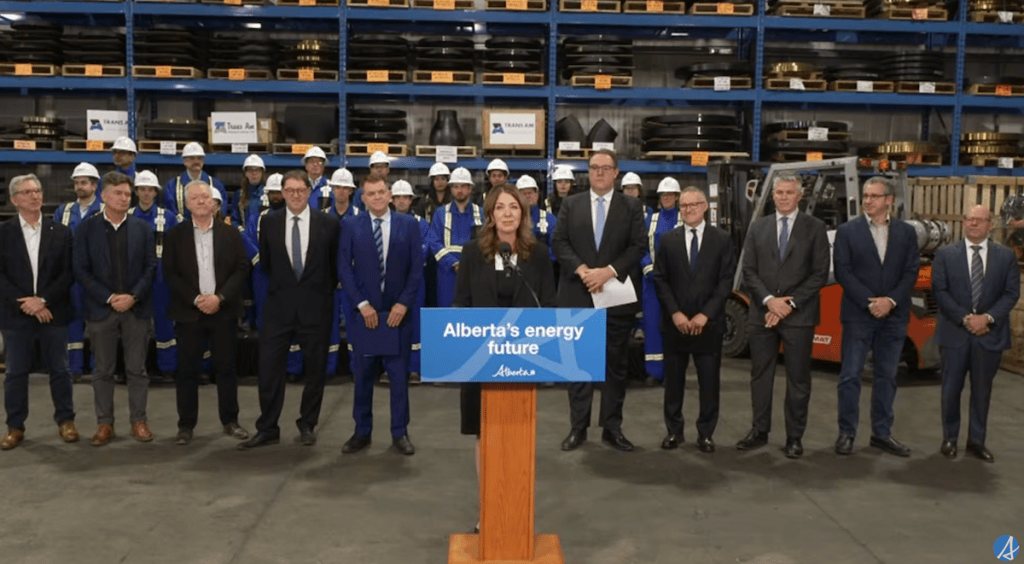
The announcement was made at a news conference in Calgary attended by Premier Danielle Smith, Energy Minister Brian Jean and Finance Minister Jason Nixon, along with a number of senior figures from the oil industry who lined up to support the plan. The government's press release estimates the program could generate approximately $205 billion in cumulative additional revenue by 2040 and more than $1.3 trillion by 2060. At the same event, Mr. Nixon responded to a reporter's question by suggesting the resulting investment could create as many as 600,000 new jobs. Premier Smith said the province would not be giving up revenue permanently, describing the measure as delaying the additional revenue that will come in later.
Janetta McKenzie, director of the oil and gas program at the Calgary-based Pembina Institute, a clean-energy think tank, was sharply critical of the plan. She said the new royalty system would return even less of the oil's value to Albertans and more to corporate shareholders. She questioned why taxpayers should be asked to subsidize oil corporations that are posting historic profits at a time when many families are struggling with a cost-of-living crisis. Dr. McKenzie also pointed to existing public costs, including large investment tax credits, a $43-billion pipeline that private investors would not finance, tens of thousands of inactive and unsecured wells, and hundreds of millions of dollars in unpaid municipal taxes from the energy sector.
Dr. McKenzie also argued that the government had not shown that the existing royalty system stands in the way of investment in either oilsands or conventional production. She said the private sector is capable of financing expansion on its own if companies believe in sustained long-term demand for oil. The industry is currently earning large profits from high prices linked to the conflict in the Middle East, which she said gives companies the means to invest without additional public support.
The projected benefits of the program depend on conditions that are not guaranteed. Its success hinges on sustained demand and continued high oil prices, both of which could change. The government's broader goal, as Premier Smith has framed it, includes doubling Alberta's oilsands output. Dr. McKenzie warned that companies now profiting from high prices could decide to leave the province if conditions shift. Whether the United Conservative Party's strategy will hold with voters, and whether the oil industry will remain in Alberta, are questions the government's announcement leaves open.
40