
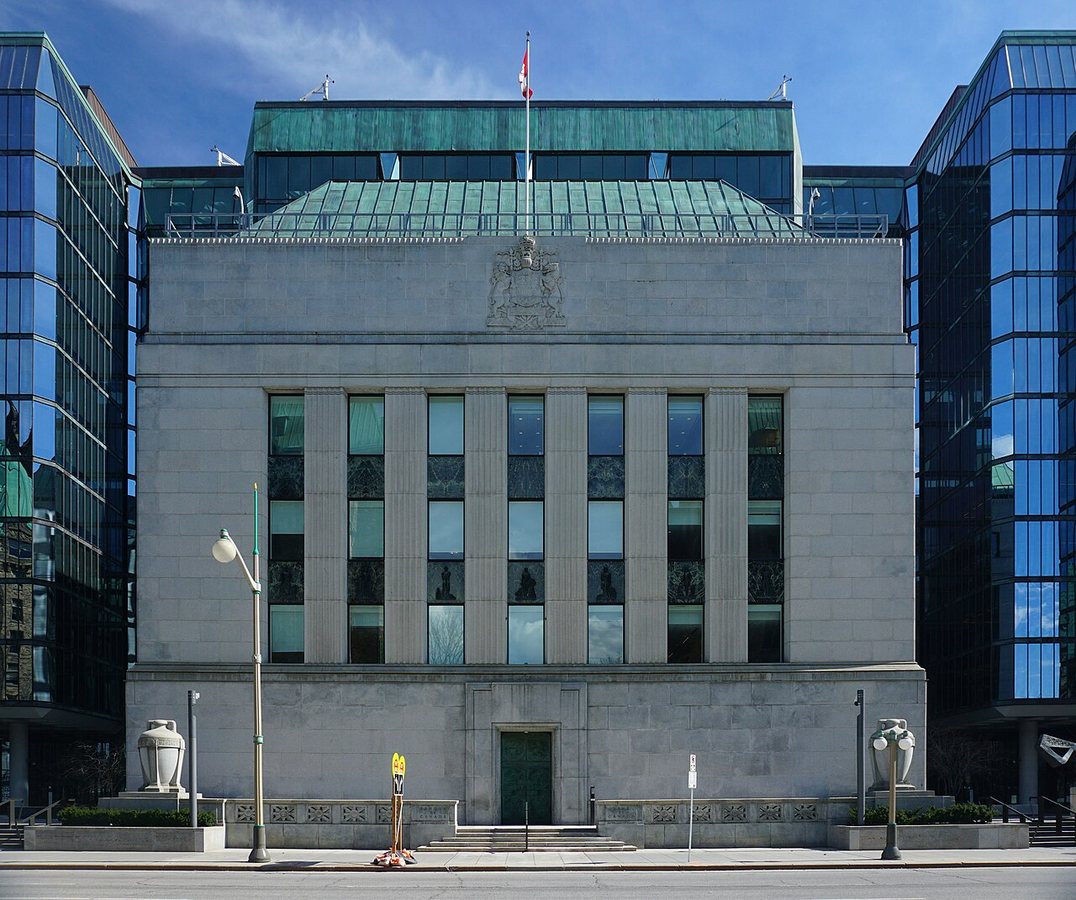
A senior Bank of Canada official is pushing back against calls for the central bank to more clearly spell out its likely interest rate path. Deputy Governor Toni Gravelle made the case in a speech in Edmonton, where he said monetary policymakers are relying more heavily on scenarios to guide their thinking during a period of pronounced uncertainty.
Gravelle pointed to a scenario the bank outlined in April, in which global oil prices stayed higher than initially forecast. He said that scenario ended up closely mirroring the actual path of oil prices through the spring and summer. That analysis, he said, helped inform the bank's decision at the end of last month to raise its benchmark interest rate for the first time in three years. The move marked a clear shift after a period in which borrowing costs had not changed, and it came as officials weighed how external energy prices were feeding through to the broader economy.
Gravelle also cautioned against being too forthcoming with forward guidance. He argued that financial markets tend to simply repeat the prospective rate changes the central bank signals, and that as a result officials would lose valuable insight into what investors themselves are expecting. In his view, heavy signalling risks crowding out the market information the bank relies on when judging how its decisions are being received.
Even so, he stressed that the Bank of Canada remains committed to helping Canadians better understand its interest rate decisions. In his view, clearer communication about the reasoning behind decisions makes monetary policy work better, even if the bank stops short of publishing a detailed forecast of where rates are headed. The emphasis, he suggested, is on explaining the logic of each decision rather than promising a fixed course.
For households and businesses across the country, the debate touches on how much warning they can expect before borrowing costs move. Mortgage holders, borrowers and companies planning investment all watch the central bank closely, and its approach to forward guidance shapes how far ahead they can plan. The recent rate increase and the oil-price scenario Gravelle cited show how external energy costs feed into decisions that affect the cost of credit in Canada, from Edmonton and Calgary in the energy-producing West to Toronto, Montreal and the Atlantic provinces.
The speech also offers a window into how the bank approaches uncertainty more broadly. By leaning on scenarios rather than a single forecast, the central bank is testing a range of possible outcomes before committing to a course. Gravelle's remarks suggest that this method, rather than a published rate path, is the framework officials currently prefer for communicating with markets and the public.
17