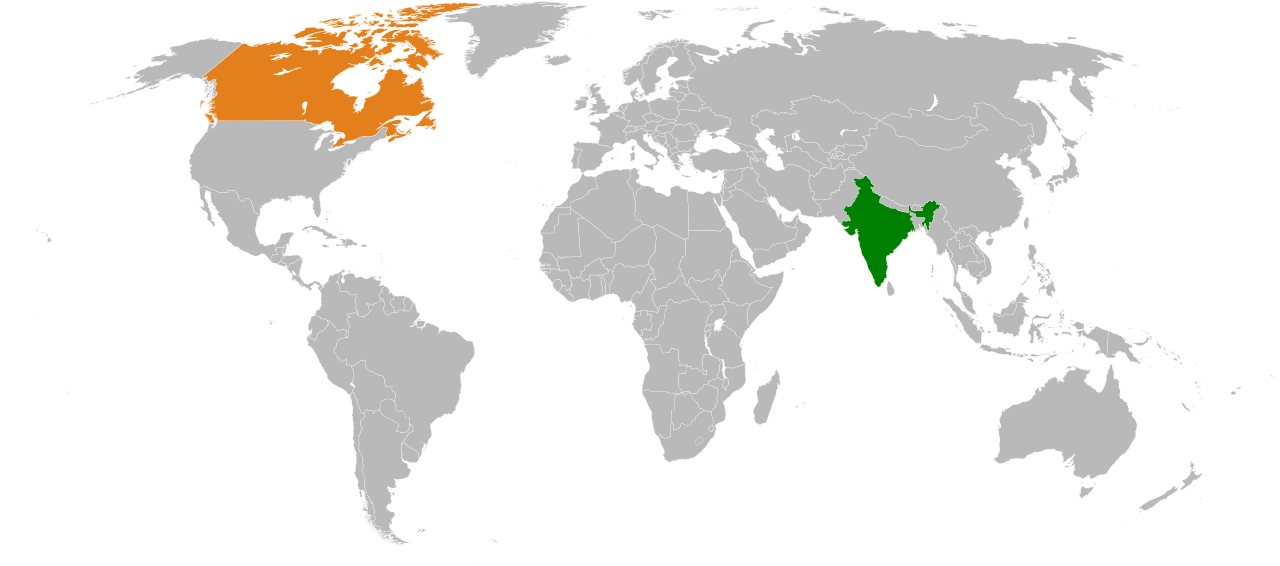
India's high commissioner to Canada, Dinesh Patnaik, says the two countries are on the cusp of finalizing a free trade agreement, 16 years after talks first began. Speaking at an event in Ottawa on Tuesday, hosted by the Centre for Strategic Statecraft and the Canadian International Council, Patnaik also said a defence agreement is likely to be signed during a visit by Indian Prime Minister Narendra Modi next month.
Prime Minister Mark Carney and Modi formally revived trade negotiations almost a year ago on the sidelines of the G20 leaders summit in South Africa. Modi is scheduled to visit Canada in December, with stops in Toronto and Ottawa on Dec. 11 and 12, just ahead of this year's G20 summit in Miami. International Trade Minister Maninder Sidhu has said Canada is looking to sign a trade agreement with India before the end of the year.
The trade push is tied to the federal Liberal government's goal of doubling non-U.S. exports over the next decade. It has also set a target of doubling two-way trade with India to $70 billion annually by 2030. In 2025, two-way goods and services trade between the two countries amounted to $30.4 billion.
The negotiations have a long and uneven history. Canada and India began trade talks in 2010, but those talks were shut down in 2023 after the federal government accused New Delhi of playing a role in the assassination of a Canadian Sikh activist in Surrey, British Columbia. Canada and India are now working to rebuild their diplomatic relationship.
Tensions between the two countries have persisted for decades over the activities of Sikh separatists in Canada, who call for an independent country called Khalistan to be carved out of India's Punjab region. India has long accused Canada of not doing enough to quiet the separatist movement. Canada has defended the right of people to express their views while condemning any violence.
Those tensions clouded then-prime minister Justin Trudeau's first visit to India in 2018. They escalated into a full-blown diplomatic dispute in September 2023, when Trudeau said Canada had evidence linking Indian government agents to the murder of a Canadian Sikh activist in British Columbia. In 2024, the RCMP said there was evidence of a wider campaign of intimidation and violence by agents with links to the Indian government. The force expelled India's high commissioner and five diplomats when they would not co-operate in the investigations, and India expelled Canadian diplomats in turn.
Carney made the first move to restore ties when he invited Modi to the G7 summit in Alberta in June 2025, where the two agreed to reappoint high commissioners. They met again at the G20 summit in South Africa last November, agreeing to launch formal trade talks covering a wide range of goods and services, including agriculture and agri-food, digital trade, mobility and sustainable development.
Carney later visited Mumbai and New Delhi in March, the first visit to India by a Canadian prime minister in eight years. The trip ended with a meeting with Modi and the signing of several agreements. These included a $2.6-billion deal to supply India with about 22 million pounds of uranium for energy generation, and 10 commercial agreements worth more than $5.5 billion.
Since then, trade talks have steadily advanced. Sidhu and Indian Industry Minister Piyush Goyal have met 10 times since May 2025. Patnaik said that as the two countries work to rebuild trust, they cannot allow what he called "fringe issues" to derail the progress made so far.
Victor Thomas, president and CEO of the Canada-India Business Council, told the same event that business between the two countries has never reached its full potential. He said that while many people may see finalizing a trade agreement as the finish line, it is only the starting point for businesses in both countries.
16