
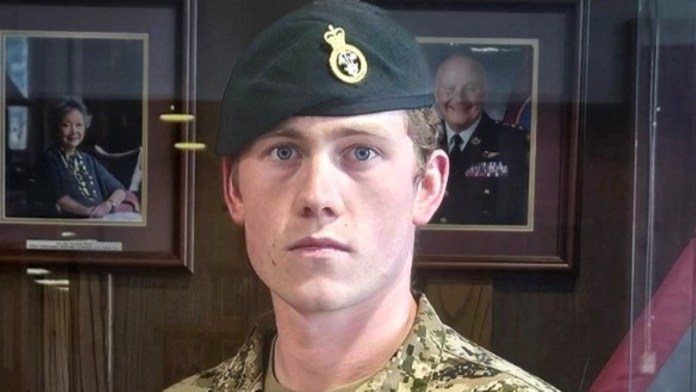
A fifth Canadian soldier has died from injuries sustained in a fire during a live-fire training exercise at Canadian Forces Base Wainwright in Alberta, the Canadian Armed Forces confirmed in a statement on November 14. Private William Douglas Dal Bianco died on November 13 while receiving medical care in Ontario, the military said. He was a member of the 3rd Battalion, Princess Patricia's Canadian Light Infantry, the Edmonton-based unit whose soldiers were involved in the incident.
The fire broke out on October 17 during Exercise Apollo Shooter, when strong winds helped the flames spread rapidly into the battalion's administrative area, according to the Canadian Armed Forces. Of the 38 members injured, 24 remain in hospital and 14 have been released, the military said. Four of the soldiers killed on October 17 were identified in an earlier release as Sergeant Morgan Wong, Private Shaun Farrell, Private Aidan Goulding and Private Hayden Lykkemark. Wong served with the Loyal Edmonton Regiment attached to the battalion, while the three privates belonged to the Edmonton-based unit.
In a statement, Chief of the Defence Staff General Jennie Carignan said the military was heartbroken by the loss of Private Dal Bianco and pledged to honour his service and support those affected by the fire. She also thanked the medical teams caring for injured members and their families. In a November 4 update, the Canadian Armed Forces said four hospitalized members had been transferred to facilities closer to their home communities in British Columbia and Ontario, a move intended to let them be treated nearer relatives. Injured members and their families are being supported through designated assistants who serve as points of contact.
According to the military's October 22 briefing, Major-General Wade Rutland, commander of the 1st Canadian Division, said the soldiers were preparing for a pairs firing exercise when the flames reached their position. In that exercise, two soldiers alternate between firing and covering one another. Rutland said the fire had been known about before it reached the soldiers but was not initially considered a threat. He acknowledged that Canadians and families are asking how that assessment was reached, what information it was based on, and whether different decisions should have been made.
A statement from the Canadian Forces provost marshal said the fire was reported on an automatic grenade-launcher range during routine training and initially burned within a designated range danger area, which restricted direct firefighting. It was monitored through the day before a change in wind direction and speed increased its intensity and spread. Military firefighters and municipal crews responded while soldiers and medical personnel treated the injured, and patients were first cared for in Wainwright before being moved to hospitals elsewhere in Alberta.
Military police are investigating whether any criminal or service offences occurred, and the Canadian Armed Forces has also announced a separate board of inquiry to examine the incident. The November 14 release did not include investigation findings or new details about what ignited the fire, so the cause and the decisions made before the fire reached the soldiers remain under review.
12