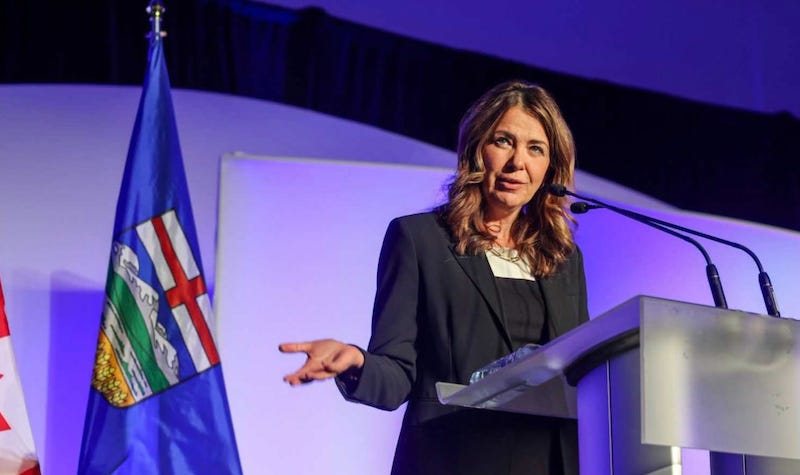
United Conservative Party members will gather at Calgary's BMO Centre for the governing party's annual general meeting on November 27, 28 and 29, 2026. Delegates will debate policy, elect board members and hear from Premier Danielle Smith, along with Saskatchewan Premier Scott Moe and British Columbia Premier Lorne Doerkson, who are listed as special guests. The meeting comes roughly a month after Albertans voted in a referendum on whether the province should remain in Canada or pursue independence, a result that has left the party's base divided along urban and rural lines and between conservatives on questions of immigration, constitutional reform and separation.
Smith enters the gathering under pressure from a series of international travel spending controversies that critics say are unwelcome at a time when many Albertans are dealing with affordability and cost-of-living challenges. The New Democratic Party has used the expenses to press the UCP, and Smith has responded by warning activists of a possible NDP victory in the 2027 election, aggressively targeting NDP leader Naheed Nenshi. Commentators have noted that Smith has been far more forceful in criticizing Nenshi than in confronting separatists within her own caucus.
The referendum itself is widely seen as part of Smith's effort to settle internal unrest and head off challenges to her leadership. She has said that UCP executive candidates and constituency association presidents will be required to sign a revised code of conduct committing them to publicly respect the result of the non-binding separation vote. Writer David Climenhaga has described the requirement as a soft version of a «Don't Ask, Don't Tell» policy. At least 15 local UCP presidents have said they will not comply, writing in a letter that the party lacks the authority to change the code of conduct without a vote of members.
Separatist sentiment has been visible within the party. Polls before the referendum suggested that more than half of UCP supporters intended to vote for Alberta to begin the process of leaving Canada. Some prominent separatist figures hold elected party positions, including Alberta Prosperity Project CEO Mitch Sylvestre, who is president of the UCP constituency association in Bonnyville-Cold Lake-St. Paul. Some members had hoped the party would allow a debate on separation at this year's meeting, but it will not. A separatism policy debate was also narrowly blocked by the party's executive board before last year's meeting. Smith has moved against prominent separatists, including Jeff Rath, who had tried to organize a challenge to her leadership.
The policy agenda reflects a membership focused on social issues. Proposals scheduled for debate include policing public washroom use, ending the reading of land acknowledgements by government and publicly funded institutions, writing biological sex into the Alberta Human Rights Act, and further protecting Albertans who decline medical vaccinations. Opposition to AI data centres, which the Smith government has backed as part of its economic direction, is also expected to surface at the meeting, even if not as a formal policy debate on the convention floor. The government recently introduced limits on where these facilities can be built, following months of pressure from Albertans, many in rural communities, who oppose the projects.
Board elections are a central focus of the gathering. The UCP board is made up of seventeen elected directors, Smith as party leader, and two non-voting MLAs who serve as caucus liaisons. Those two positions are chosen by a vote of UCP MLAs and are currently held by Chantelle de Jonge, MLA for Chestermere-Strathmore, and Jennifer Johnson, MLA for Lacombe-Ponoka. Johnson's daughter, Abigail Johnson, was elected as an Edmonton director at last year's meeting. Half of the director seats are up for election this year. Slates backed by the social conservative Take Back Alberta group and the separatist Alberta Prosperity Project have won sweeping successes at recent meetings, fuelling speculation about the outcome. A «Team Unity» slate, which mirrors a «Premier's List» slate rumoured for weeks, has emerged as the candidates believed to be preferred by Smith, her office and her close allies.
4