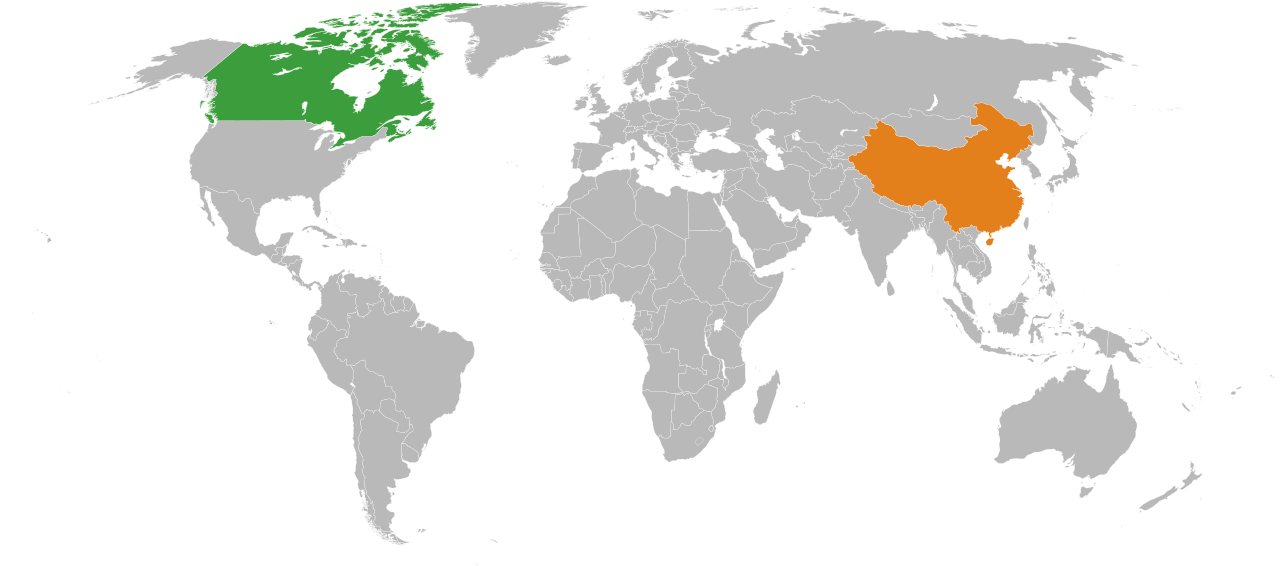
Canada's pivot away from the United States should not stop at China, according to a policy analysis arguing that diversification must spread trade across many markets rather than simply swapping one dependence for another. The piece argues that the rupture in Canada-U.S. relations, driven by the second Trump presidency, has left lasting damage to trust even if tariffs on Canadian goods are eventually rolled back.
The analysis points to the scale of Canada's reliance on its southern neighbour. The United States took 71.7 per cent of Canadian exports in 2025, a share that fell by more than four per cent after Donald Trump returned to the White House. The United States has also been Canada's main supplier of military equipment. The author argues that leaning on a superpower for both security and market access had made Canada complacent, and that the president's actions have forced a change in direction regardless of who succeeds him.
Diversification, the analysis contends, must separate defence partnerships from economic ones. It argues that closer security ties with the European Union and democracies in the Indo-Pacific should rest on shared political values, and that Canada should not buy military equipment from non-democracies however convenient that may be. Prime Minister Mark Carney has made progress with the EU since taking office, including on defence, although the shape and name of that relationship remain unclear.
On the economic side, the analysis describes China as a rising power and a market Canada can ill afford to ignore. China remains the world's second-largest economy and a major consumer market, with a fast-growing high-tech sector. Energy, agri-food, and metal ores and minerals are the areas where Canadian exporters have made the most headway. Carney established a strategic partnership with Beijing during a trip in January and was due to meet Chinese President Xi Jinping at the Asia-Pacific Economic Cooperation leaders' meeting. Exports to China grew by almost 40 per cent to $33.5 billion in the first nine months of this year.
The analysis cautions that this growth should be read as diversification away from the United States rather than an embrace of China. Relations between the two countries turned icy in 2018 after Canada arrested Huawei chief financial officer Meng Wanzhou and Beijing detained Canadian citizens Michael Kovrik and Michael Spavor. Trade has proved fragile since then: Canadian canola seed, pork and beef faced restrictions in 2019, and in March 2025 canola oil and certain pork products were targeted after Canada imposed surtaxes on Chinese electric vehicles.
To reduce over-reliance, the analysis recommends that industries set, monitor and enforce a threshold for the share of exports going to any single market, beyond which producers would be considered vulnerable. Agri-food exports, which have been targets of Chinese trade measures before, are singled out as a sector where concentration is particularly risky. The overall message is that Canada should spread its trade across many countries, starting with China but not ending there.
10