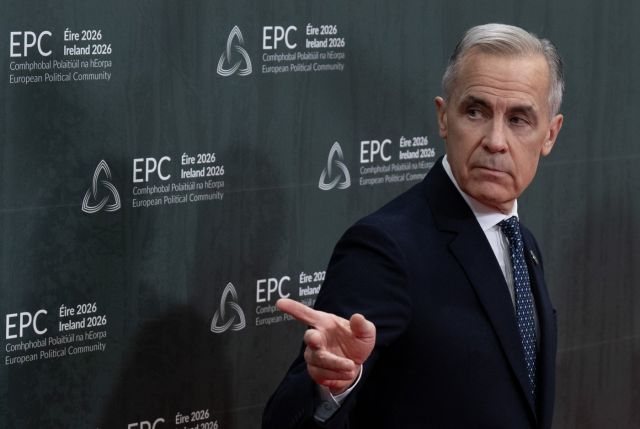
Prime Minister Mark Carney is in Dublin for a series of informal meetings with European leaders, a stop that comes before his planned summit trips to Asia. The visit places Canada's prime minister among the participants in a wider European diplomatic gathering at a time of continuing security concerns on the continent.
Carney is attending the European Political Community summit, a forum that brings together leaders from across the continent to discuss geopolitical issues. The format meets every six months. It was established after Russia's invasion of Ukraine in 2022, as European governments sought a regular venue for political dialogue beyond the European Union's own institutions. Its meetings are designed to be less formal than traditional treaty negotiations, which gives participating leaders room to speak openly about shared security questions.
The Dublin stop is part of a longer itinerary. Carney's office has linked it to upcoming travel to Asia, where he is expected to attend further summits. The sequencing suggests that Ottawa is using the European meetings to consult with partners before turning its attention to the Asia-Pacific region. The full schedule of his stops was not set out in the reporting available, and it is not yet clear how many days the Dublin leg will last or which European capitals, if any, will be visited beyond Ireland.
Reporting on the visit remains incomplete. The full agenda for the Dublin meetings and the outcomes of the discussions have not been confirmed, and no specific bilateral agreements or commitments had been announced at the time of writing. The source material available does not include direct quotations from Carney or from the Irish government about the talks, and no reactions from opposition parties in Ottawa or from European officials have been recorded in the reporting. Further detail on what Carney raised with European counterparts, and whether any concrete arrangements will follow, is expected as the trip proceeds.
For Canadians, the trip reflects the government's broader effort to widen its diplomatic and trade relationships beyond its traditional partners. Ireland is a member of the European Union, and the European Union is one of Canada's major economic partners, so high-level contact with European capitals carries implications for trade, security cooperation and the coordination of positions on Ukraine. The Asia leg of the journey extends that engagement to a region where Canada has pursued trade and diplomatic ties in recent years. Any commitments made in Dublin or on the Asia leg would be expected to be detailed by the Prime Minister's Office once confirmed, and their effect on Canadian businesses, workers and foreign policy would become clearer at that point.
5