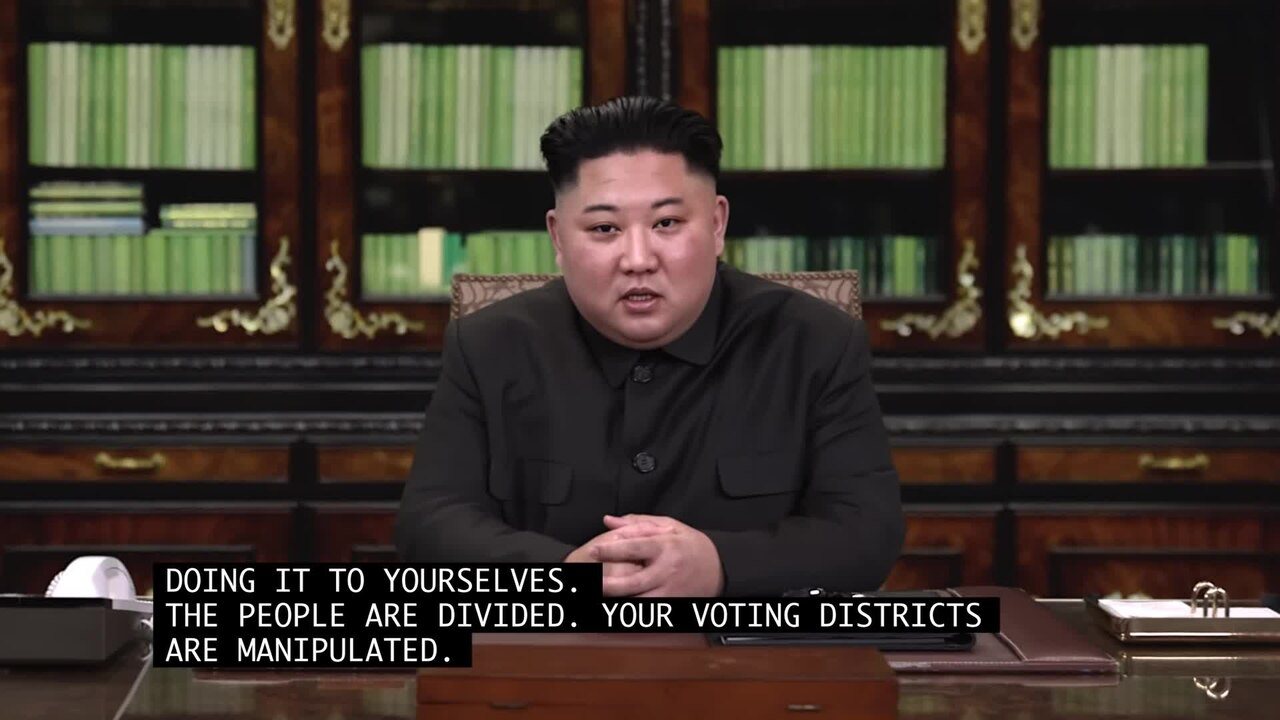
A network of deepfake videos, likely run from outside Canada, is spreading politically divisive false claims about the trade war between Canada and the United States. This was reported by the McGill University Centre for Media, Technology and Democracy, which analyzed the network's activity. The researchers describe the campaign as a systematic attempt to influence public opinion ahead of and during the ongoing trade dispute between the two countries.
The authors use deepfakes of the faces of real influencers. Real faces are combined with artificially created lip movements and synthesized voices, so the clips can be mistaken for ordinary vlogs. According to the researchers, the aim of the campaign is to divide Canadians against one another, as well as to set them against the United States and their own government. In total, about 300 accounts on TikTok and Instagram are involved in the network, which have published more than 3,200 videos. These clips were viewed 22.1 million times over three months. At the same time, TikTok labeled only 4 percent of such videos as AI-generated, meaning most of the material carried no warning label for viewers.
The most popular video claims that Prime Minister Mark Carney cancelled defence contracts with the United States worth 8 billion dollars. Another widely shared storyline invents that President Donald Trump's ultimatum with a 48-hour deadline was never issued. The ultimatum story was used in 161 videos published by 129 accounts, and it reached 5.1 million views. At the same time, only 6.3 percent of users who left comments called the clips fake or propaganda. Roughly one in ten commenters addressed the characters as if they were real people, which shows how convincing the fabricated videos appear.
The accounts cover the trade debate from both sides, and the presenters in the videos switch between Canadian and American identities. This dual positioning makes it harder to identify the source and makes the network resemble ordinary users who supposedly express their own opinions. The researchers point to signs of foreign origin: the posting times do not match North American time zones, and activity decreases at night in Eastern and Southeast Asia. Some accounts have Chinese-language settings or are registered in China.
At the same time, key questions of the study remain unresolved. The identity and country of the network's operators have not been confirmed, and the motive is unclear. The researchers have not found a narrative promoting the government of a foreign state, and the accounts have not yet been monetized. This leaves room to suppose that the network may be building an audience for later use, or that it is testing a tool or a paid influence operation. None of these assumptions has been confirmed, and further research must establish who is behind the campaign and what its purpose is.
2