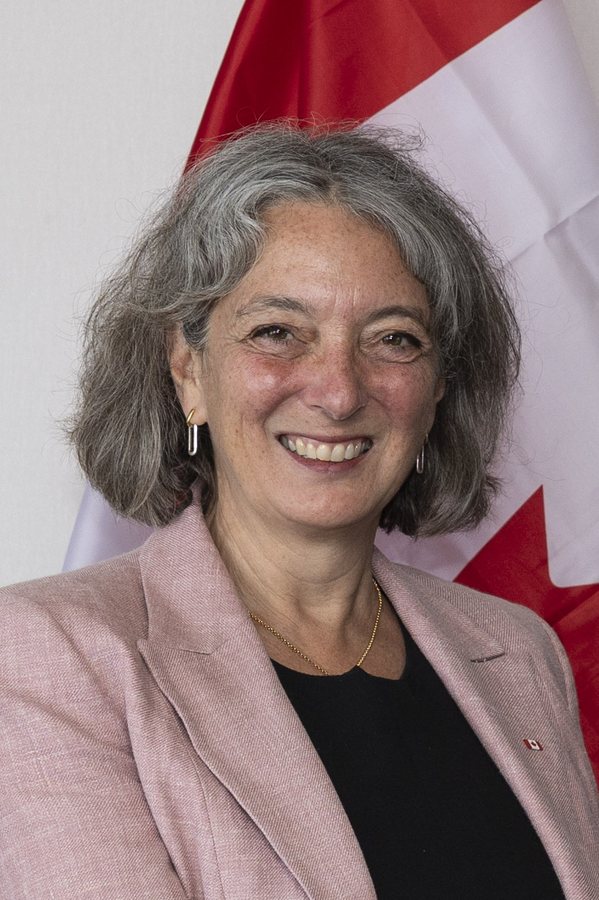
Two former federal environment ministers have accused Environment Minister Julie Dabrusin of misrepresenting Canada's climate record, after she said the country is "absolutely committed" to its Paris Agreement commitments. Catherine McKenna and Steven Guilbeault, who each held the portfolio under the Trudeau government, say the claim does not match the evidence and that Canada is unlikely to meet its 2030 target.
Dabrusin made the remarks in an interview with The Canadian Press around the COP31 climate talks in Antalya, Turkey, shortly before her trip to the conference. McKenna described the commitment claim as "factually untrue" and said Canada has zero chance of meeting its 2030 target. Guilbeault said the claim "defies reason" and called it disingenuous, citing federal government modelling and analyses from the Canadian Climate Institute.
The dispute turns on how far Canada has come against its emissions goals. The Harper government set a target of cutting emissions 30 per cent below 2005 levels. The Trudeau government raised that goal to 40 to 45 per cent below 2005 levels by 2030, and in 2021 set a net-zero goal for 2050. As of 2024, national emissions were down only 10.3 per cent from 2005 levels, a reduction of 78 megatonnes over 21 years. Among G7 countries, Canada ranks last in emissions reductions over that period.
Independent projections point in the same direction. Modelling from the Canadian Climate Institute suggests that net-zero by 2050 is unlikely under current conditions. Federal Environment Commissioner Jerry DeMarco projects a 28 per cent cut by 2030, a figure that accounts for policy rollbacks made over the past 18 months. Those rollbacks include the cancellation of the consumer carbon price and the two billion trees program, the dropping of the oil and gas emissions cap, the abandonment of the electric vehicle mandate and the low-carbon fuel procurement program, and a weakening of the industrial carbon price.
The government's own messaging has also shifted. In June, Prime Minister Mark Carney said emissions are likely to rise in the coming years. His remarks were widely read as an abandonment of the 2030 goal, although the government has not formally said so. Carney has described the Trudeau-era climate policies as too expensive and divisive, a position that has put him at odds with the approach taken by his predecessor.
Dabrusin's statement now sits between two competing accounts. Her office maintains that Canada remains committed to the Paris framework, while former ministers and independent analysts argue that the gap between that commitment and actual emissions performance has widened. Whether the federal government will publicly revise its 2030 target, or present a concrete plan to close the gap, remains an open question for Canadians and for the country's international partners ahead of the Antalya talks.
30